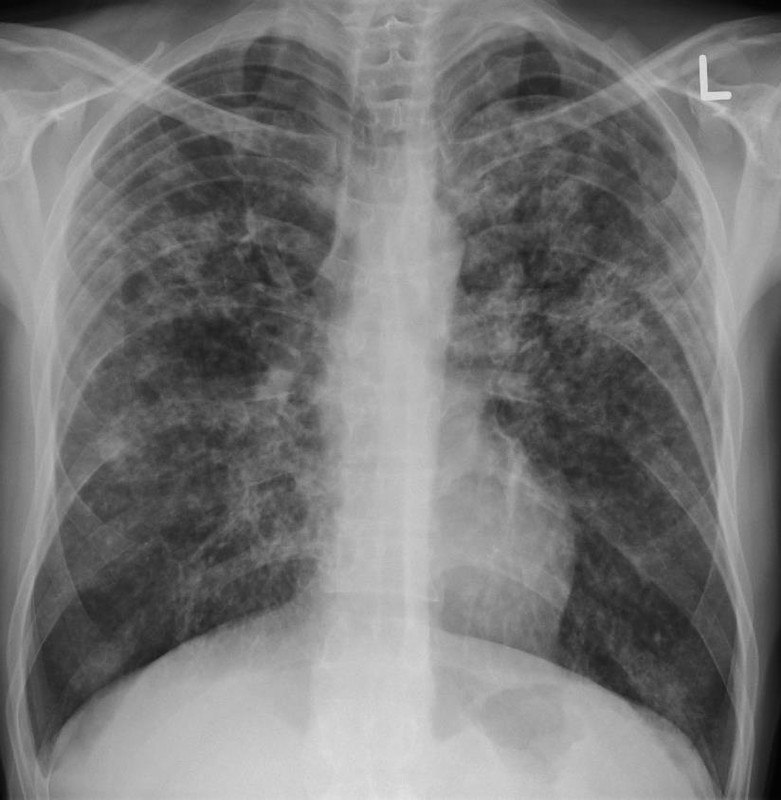
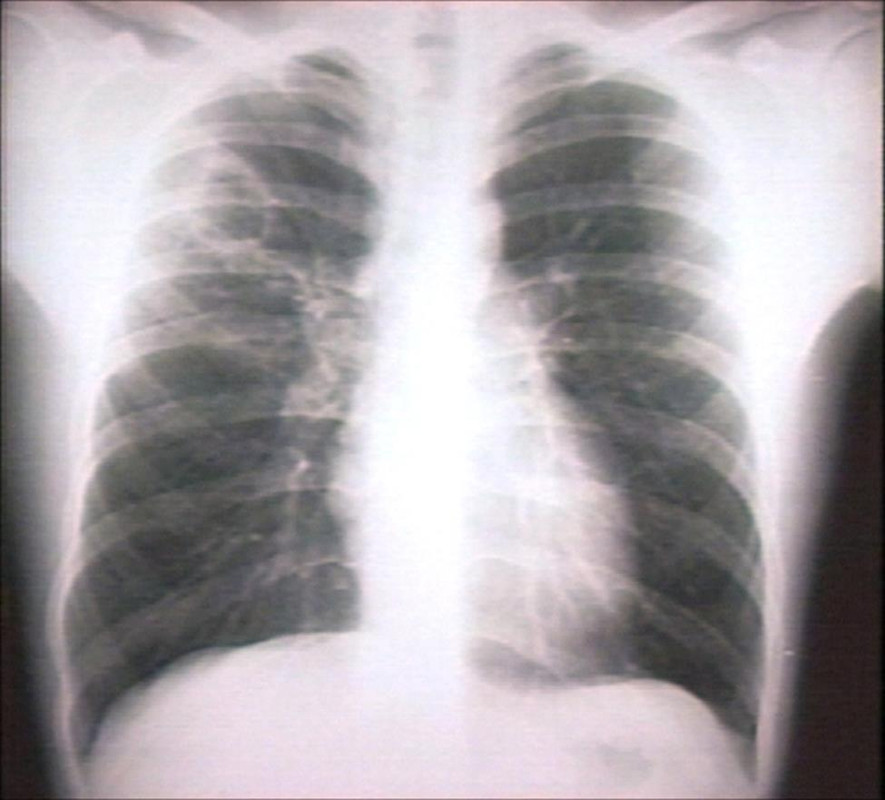
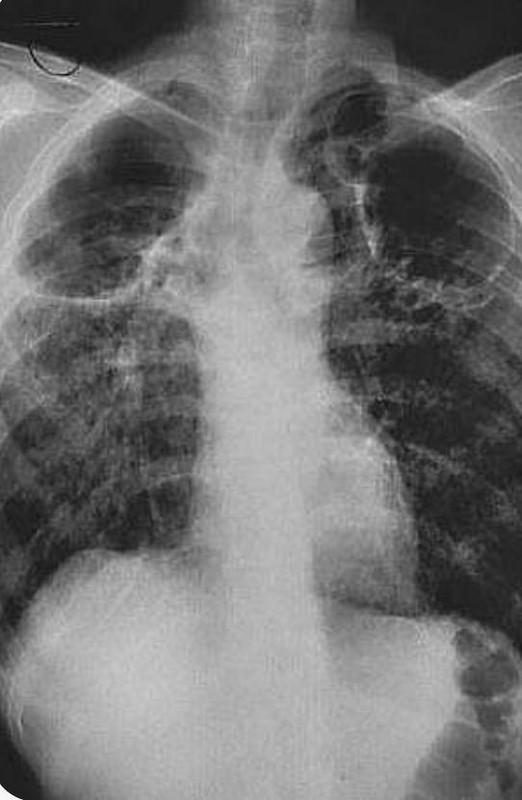
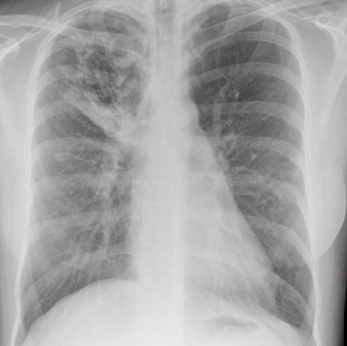
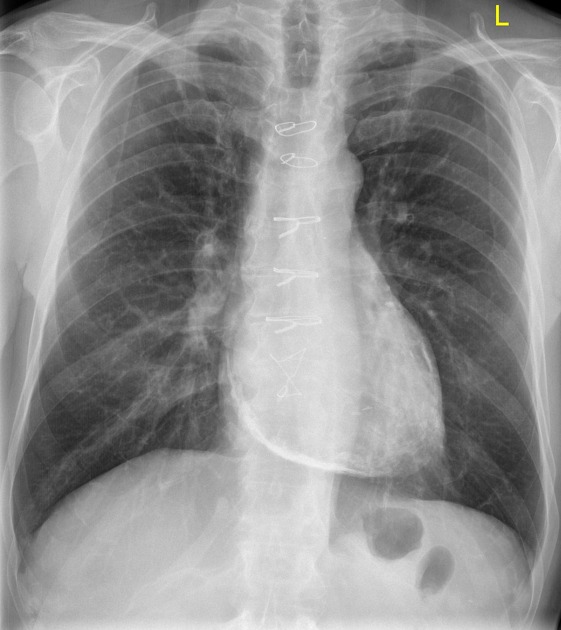
A 28-year-old female nurse, undergoing mandatory health screening for a new position in a pediatric unit, presents for her PPD test reading. She reports no cough, fever, weight loss, or night sweats. Her PPD test, administered 72 hours prior, reveals a 13 mm area of induration. Her vital signs are: blood pressure 122/78 mmHg, pulse 68 bpm, respiratory rate 14 breaths/min, and temperature 36.9
A valid, parseable JSON should be generated. Besides scalars, boolean, and null, other values must be double-quoted as valid strings. No comments are allowed inside the JSON block. No control tokens (such as \n and \t) are allowed. If multiple JSONs are requested, a single parseable JSON array must be returned. No extra text outside of the JSON string.
When producing JSON, the schema provided in the context must be followed.
Here is the corrected JSON, assuming the prompt requires a single JSON object (not an array, as the initial structure suggests a single question):
```json
{
"id": 328,
"body": "A 28-year-old female nurse, undergoing mandatory health screening for a new position in a pediatric unit, presents for her PPD test reading. She reports no cough, fever, weight loss, or night sweats. Her PPD test, administered 72 hours prior, reveals a 13 mm area of induration. Her vital signs are: blood pressure 122/78 mmHg, pulse 68 bpm, respiratory rate 14 breaths/min, and temperature 36.9
C. Physical examination is entirely unremarkable. She has no known immunocompromising conditions. What is the most appropriate initial diagnostic assessment and subsequent management strategy?",
"labresults": [
{
"parameter": "Hemoglobin",
"value": "145 g/L",
"refrence": "120-160 g/L"
},
{
"parameter": "White Blood Cell Count",
"value": "7.2 x 10^9/L",
"refrence": "4.0-11.0 x 10^9/L"
},
{
"parameter": "Creatinine",
"value": "70 µmol/L",
"refrence": "44-97 µmol/L"
},
{
"parameter": "ALT",
"value": "25 U/L",
"refrence": "7-56 U/L"
}
],
"options": [
{
"id": 0,
"text": "A chest radiograph to exclude active pulmonary tuberculosis, followed by consideration of latent tuberculosis infection treatment if the chest radiograph is unremarkable.",
"correct": true
},
{
"id": 1,
"text": "Immediate initiation of a four-drug antituberculosis regimen (e.g., isoniazid, rifampin, pyrazinamide, ethambutol) due to high-risk occupational exposure.",
"correct": false
},
{
"id": 2,
"text": "Conducting an Interferon-Gamma Release Assay (IGRA) to confirm exposure, followed by annual symptom monitoring if IGRA is positive.",
"correct": false
},
{
"id": 3,
"text": "Repeat purified protein derivative (PPD) test in 4-6 weeks to confirm sensitivity, and if positive again, no further action unless symptoms develop.",
"correct": false
},
{
"id": 4,
"text": "Sputum collection for acid-fast bacilli (AFB) smears and cultures, and respiratory isolation until results are negative.",
"correct": false
}
],
"rationale": "A 28-year-old female nurse, undergoing mandatory health screening for a new position, presents with a 13 mm induration from a PPD test. This PPD result is considered positive for a healthcare worker, as the cutoff for individuals at higher risk of exposure, such as healthcare personnel, is equal to or greater than 10 mm. A positive PPD indicates exposure to Mycobacterium tuberculosis and the development of a cell-mediated immune response, suggesting latent tuberculosis infection (LTBI). However, it does not differentiate between latent infection and active disease. Therefore, the immediate next step is to perform a chest radiograph to rule out active pulmonary tuberculosis, which requires multi-drug therapy and potentially isolation. If the chest radiograph is unremarkable, active disease is excluded, and the patient is considered to have LTBI. In such cases, treatment for LTBI is strongly indicated, especially in healthcare workers, to prevent progression to active disease and potential transmission. Common regimens for LTBI include 9 months of isoniazid or shorter regimens such as 3-4 months of rifampin-isoniazid combination.",
"details": [
{
"id": 0,
"text": "This option correctly outlines the appropriate diagnostic and initial management pathway. A positive PPD necessitates a chest radiograph to exclude active pulmonary tuberculosis. If the chest X-ray is clear, indicating latent tuberculosis infection (LTBI) rather than active disease, treatment for LTBI is then considered, particularly for healthcare workers, to prevent future progression to active disease."
},
{
"id": 1,
"text": "Immediate initiation of a four-drug antituberculosis regimen is reserved for confirmed or highly suspected active tuberculosis disease. While the patient has a positive PPD, there are no reported symptoms (e.g., cough, fever, weight loss, night sweats) or abnormal physical findings suggestive of active disease. A chest radiograph is a prerequisite to distinguish between latent infection and active disease before committing to such an aggressive regimen."
},
{
"id": 2,
"text": "While an Interferon-Gamma Release Assay (IGRA) is an alternative diagnostic tool for tuberculosis infection, it is not typically the next step when a PPD test has already yielded a clear positive result in a high-risk individual like a healthcare worker. Furthermore, annual symptom monitoring is insufficient management for a positive LTBI in a healthcare worker, as treatment is generally recommended to prevent progression to active disease and protect vulnerable patient populations."
},
{
"id": 3,
"text": "Repeating a PPD test after a clear positive reading is not appropriate and offers no additional diagnostic value. A positive PPD indicates infection, and in a healthcare worker, this finding necessitates further evaluation and potential treatment, not simply waiting for symptoms to develop. This approach neglects the opportunity for crucial preventive therapy."
},
{
"id": 4,
"text": "Sputum collection for acid-fast bacilli (AFB) smears and cultures, along with respiratory isolation, is indicated when there is a strong clinical suspicion of active pulmonary tuberculosis, based on symptoms, abnormal chest imaging, or contact tracing of a confirmed case. This patient is asymptomatic with a normal physical exam, making this an overly aggressive and premature step without initial radiographic assessment."
}
],
"meta": {
"focus": [
"Diagnosis",
"Evaluation",
"Management",
"Prevention"
],
"topic": [
"Tuberculosis",
"Latent Tuberculosis Infection"
],
"keywords": [
"PPD",
"Tuberculin Skin Test",
"Latent TB",
"Active TB",
"Chest X-ray",
"Healthcare Worker Screening",
"Isoniazid",
"LTBI"
]
}
}
```